A fit-out isn’t cheap, and the materials you settle on will decide whether that spend was worth it. Offices, shops, restaurants, clinics – they all take a beating most homes never see. Constant foot traffic, cleaning that never lets up, the slow grind of daily use. A finish can look sharp on day one and still chip, fade, or warp before the year is out.
Pick durable materials early, and you’ll spend less down the track while keeping the place looking like somewhere people want to be. What follows is a plain look at the flooring, wall finishes, and fixtures that hold up under real commercial pressure, so you’ve got something solid to weigh up before you sign anything.
Flooring Solutions for High-Traffic Commercial Spaces
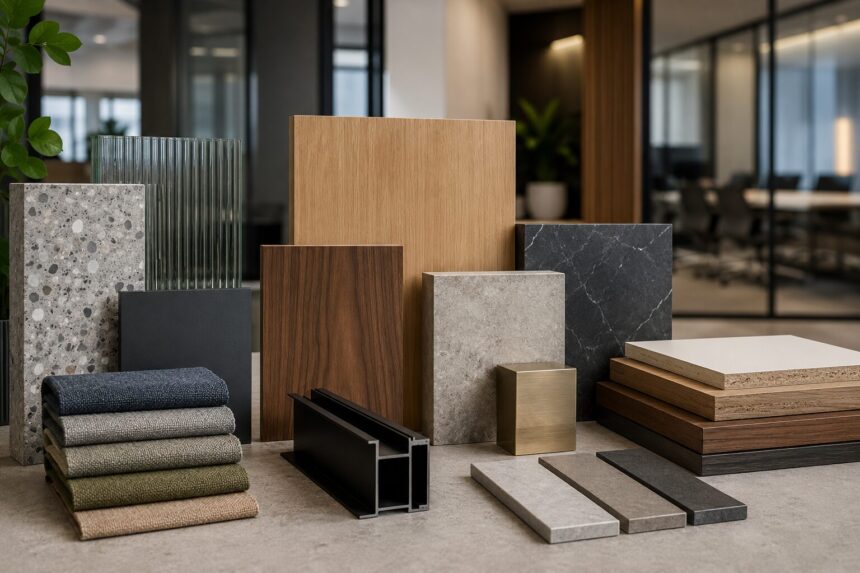
Nothing else in a space gets walked on, dragged across, and dropped onto quite like the floor, so this is one to get right. Polished concrete keeps winning people over – warehouses, showrooms, plenty of modern offices. It laughs off scratches and stains, copes with heavy traffic, and rarely needs more than a mop. That stripped-back industrial look is a bonus if it suits your style.
Porcelain tiles are worth a look too, especially in restaurants, lobbies, and bathrooms. They’re dense, they shrug off water, and they survive both dropped crockery and relentless scrubbing. The finishes run into the hundreds, so you can fake the look of timber or stone and lose nothing on toughness.
After warmth and a quieter room? Commercial-grade carpet tiles do the job. Forget the soft stuff in your living room – these have tighter fibres and a sturdier backing, made to last. There’s a handy upside to the tile format, as well: ruin one section, and you replace just that square instead of redoing the lot.
Wall Finishes That Withstand Wear and Tear
Walls seem harmless enough, right up until you notice how fast a busy room fills them with scuffs and dents. Vinyl wall coverings hold up well here. They resist moisture, wipe clean in moments, and earn their keep in healthcare and hospitality settings where people are forever brushing past.
Paint hasn’t gone anywhere, though the product matters. Commercial-grade washable paints in a satin or semi-gloss finish leave standard matte in the dust. They take repeated cleaning on the chin and ignore the scrapes left by trolleys, chairs, and the occasional careless elbow.
Then there are the rough spots – corridors, loading bays – where protective wall panels genuinely pay off. Laminate, stainless steel, or sealed plywood soak up the knocks that would otherwise tear into bare plasterboard. Plywood from the likes of Bord Products is a quiet favourite: cheap enough, tough, easy to finish so it blends in, and it adds real backbone to the wall.
Robust Fixtures and Fittings
Fixtures get handled all day, every day, which is precisely why bargain-bin fittings give out fast and irritate everyone unlucky enough to use them. Solid surface countertops in quartz or engineered stone fend off scratches, heat, and stains. They’re a good match for reception desks, kitchenettes, and retail counters, where the thing has to look good and survive.
Don’t cut corners on cabinetry, either. Commercial-grade units come with thicker boards, reinforced joints, and hardware built for thousands of open-and-shut cycles. Go cheap, and you’ll be looking at drooping shelves and dead hinges in a matter of months.
Hardware slips most people’s minds, yet it quietly carries a lot. Stainless steel handles, hinges, and fittings resist corrosion and keep going long after the cheaper stuff has rusted solid. In kitchens and washrooms, where moisture is part of the deal, it’s nearly always the sensible pick.
Investing in Quality for Long-Term Value
The cheapest fit-out almost never works out cheapest in the end. Durable materials do cost more upfront – no getting around that. But you claw it back through fewer repairs, less downtime, and a space that still impresses clients and staff years later. Every fix interrupts your operations and chips away at the budget, so spending sensibly at the start is just the smarter call.
So as you plan the next one, look past the launch-day photos and picture each material ten years in. Press your suppliers on warranties, on upkeep, on how their products have actually fared in places like yours. Get those decisions right, and you protect your investment and your reputation at the same time.